Search for awake breast augmentation and most of what comes back is other surgeons telling you not to do it.
One piece is titled “what they’re not telling you.” Another explains why awake plastic surgery isn’t what it seems. The objections are specific, they come from board-certified people, and if you’re weighing this procedure they deserve a straight answer rather than a reassuring one.
I perform breast augmentation under local anesthesia at my practice in Paramus, so I’m not a neutral party. What I can do is take the four criticisms that actually get published and tell you which ones I think are fair. One of them is, substantially.
“There’s no anesthesiologist in the room”
Correct. That’s the design rather than an oversight.
An anesthesiologist is there to manage general anesthesia. They put you under, keep you there safely, manage your airway, and bring you back. Take general anesthesia out of the procedure and you’ve removed the thing they are present to manage. You aren’t intubated, your breathing isn’t being controlled for you, and there’s no propofol in the room.
What you get instead is an oral anti-anxiety medication, usually Valium, and local anesthetic injected into the breast. I give both myself. The numbing takes about ten minutes to set, and from that point most patients describe pressure and tugging rather than pain.
There’s a sharper version of this criticism that I think does land: a surgeon who is operating cannot watch a patient the way a dedicated anesthesia provider would. That’s true, and it’s why the next question matters more than this one.
“It isn’t done in an accredited facility”
This is the strongest objection in the whole debate, and it’s also the one you can check yourself in about five minutes.
Awake surgery is often marketed on price. Part of that saving is real, because no general anesthesia means no anesthesia provider fee. Part of it, at some practices, comes from operating in a room that never had to meet a standard in the first place. Those two things look identical on a quote.
Our surgical facility is accredited by the American Association for Accreditation of Ambulatory Surgery Facilities and licensed by the State of New Jersey as a surgery center. Accreditation sets requirements for equipment, staffing and emergency preparedness. State licensure means the facility is subject to outside inspection. Neither is a marketing claim; both are verifiable.
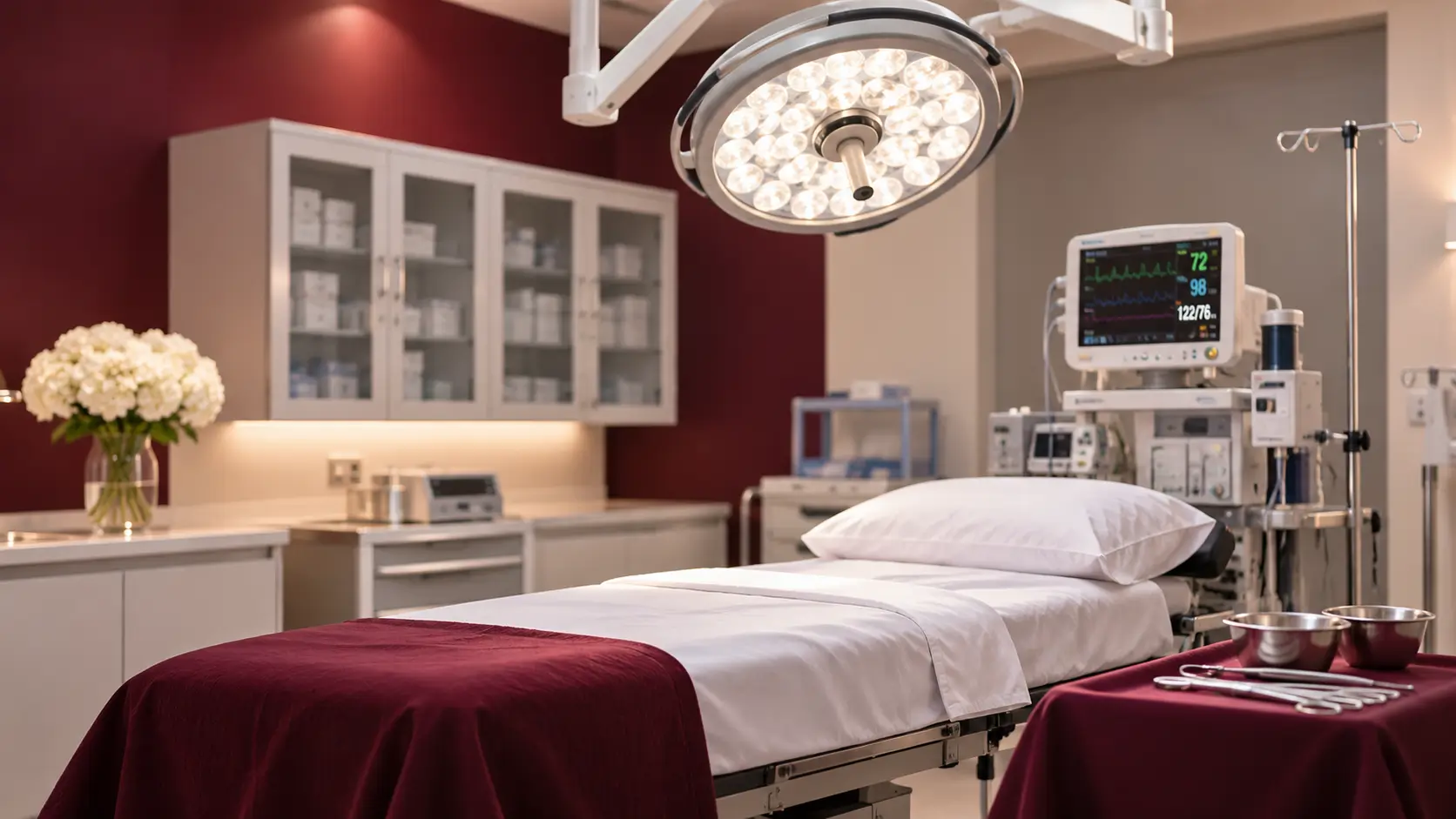
So ask any practice you’re considering, in these words: is the facility accredited, by which body, and is it licensed by the state as a surgery center? A practice that gets vague on that question has answered it.
“You can overdose on local anesthetic”
This is the real clinical risk in awake surgery, and it deserves precision rather than reassurance.
Local anesthetics have a maximum safe dose calculated from body weight. Exceed it and blood levels can climb high enough to affect the central nervous system and the heart, a condition called local anesthetic systemic toxicity. It is uncommon. It is also serious, and pretending otherwise would be dishonest.
That dose ceiling is a hard constraint on what awake surgery can do, and I’d rather describe it as a limit than a technicality. There is only so much tissue that can be safely numbed in one sitting. It is the main reason I don’t combine awake augmentation with a long list of other procedures in the same visit, and the reason some patients are better served by general anesthesia. Where awake surgery has gotten people into trouble, it has usually been because someone worked around that ceiling rather than within it.
“Patients can’t make a sound size decision while awake”
This criticism has the most force of the four, and parts of it are simply correct.
The argument runs like this. A patient sitting up and looking in a mirror partway through surgery is in no state to make a considered judgment about implant size, and implants that are too large for the tissue are among the leading reasons women come back for revision years later.
The second half of that is accurate. Oversized implants relative to what the tissue can carry cause stretch, thinning, visible edges and bottoming out, and those problems tend to show up at year eight rather than year one.
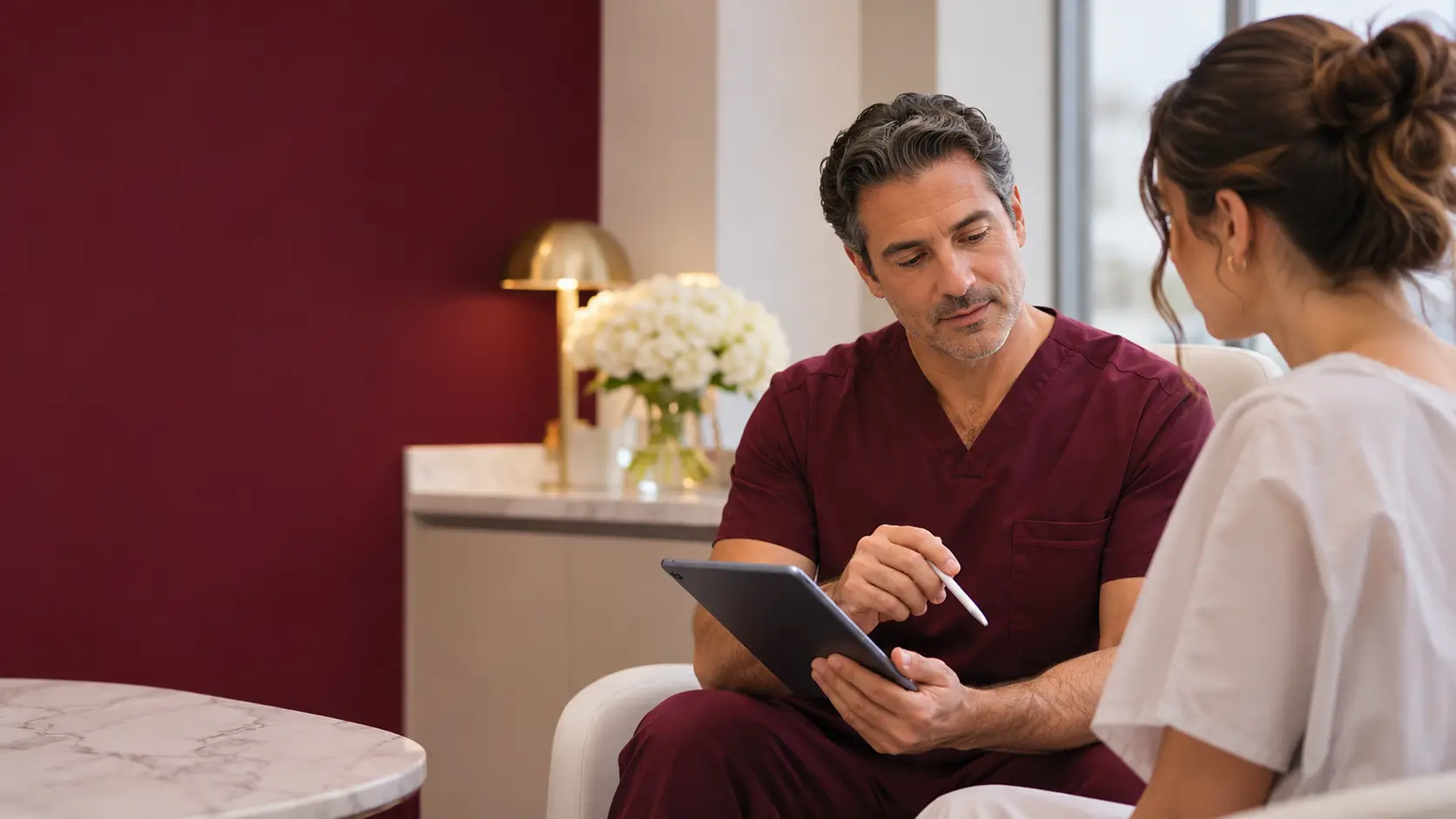
Where I disagree is about when the decision gets made. Size shouldn’t be settled in the operating room at all. It’s settled at the consultation, from chest wall measurement and tissue thickness, which is also what decides implant profile and how much volume your frame can carry without trouble later. Sitting up during the procedure is a check on a plan that already exists. It is not a substitute for having made one.
If a practice is selling “choose your size on the table” as the headline attraction, that is exactly the version of awake surgery the criticism is aimed at, and it’s aimed correctly.
Who shouldn’t have an awake augmentation
Most of what’s written about this procedure, including a fair amount of it by practices that offer it, skips this part.
Awake augmentation isn’t right for everyone. The people I turn away, or steer toward general anesthesia, generally fall into a few groups.
Patients with significant anxiety about being conscious during surgery. Valium takes the edge off; it does not make you indifferent to being in an operating room, and some people know themselves well enough to know this isn’t for them. Patients who need a large amount of tissue numbed, whether because of the extent of the surgery or because several procedures are being combined, for the dosing reason above. Patients whose medical history makes lying still and cooperative for the duration unrealistic. And patients having complex revision work, where the operating time and the unpredictability are both higher.
None of that makes awake surgery a worse operation. It makes it a specific one, suited to a specific set of patients, and a practice that claims everyone is a candidate is telling you something about its screening rather than about the technique.
What the hour is actually like
You arrive, take the Valium, and wait for it to work. I inject the local anesthetic in stages, using a fast-acting agent and a longer-lasting one together. The injections feel like injections. After about ten minutes the area is numb.
From there you’re awake and able to talk to the team. A lot of patients get drowsy from the Valium and doze. Sterile conditions are no different from any other operation in the facility.
Afterwards you walk out rather than being wheeled out, and you go home the same day. The long-acting anesthetic is still working for the first several hours, which covers the window when a general anesthetic patient is usually at their least comfortable. The thing most patients comment on is what’s absent: no grogginess, no sore throat from a breathing tube, and far less of the nausea that often follows general anesthesia.
Recovery from that point on is much the same as a standard augmentation, and our guide to returning to exercise after breast augmentation applies either way.
Common questions
Is awake breast augmentation safe?
It has a different risk profile rather than a uniformly lower one. Avoiding general anesthesia removes the risks that come with it, including airway complications and post-operative nausea. It introduces a constraint around local anesthetic dosing that has to be respected. The facility’s accreditation and the surgeon’s patient selection matter more to your safety than the technique itself.
Will I feel the surgery?
You should feel pressure and tugging, not pain. The local anesthetic blocks pain sensation but not the sense of movement, which is why patients often describe the feeling as someone pressing on the chest. Tell your surgeon during the procedure if you feel anything sharp, because more anesthetic can be given.
Is awake breast augmentation cheaper?
It usually costs less, because there is no anesthesia provider fee. Be careful comparing quotes on price alone. Ask whether the lower figure reflects the absence of general anesthesia or the absence of an accredited facility, since those are very different things.
Can I still choose my implant size during surgery?
You can sit up and look, and it’s a useful final check. The size should already have been decided at your consultation from measurements of your chest wall and tissue, not improvised in the operating room. Implants chosen that way are the ones that hold up over a decade.
Who is not a candidate for awake breast augmentation?
Patients with significant anxiety about being conscious during surgery, those needing a large area numbed or several procedures combined, those whose medical history makes staying still difficult, and most complex revision cases. Candidacy is assessed at consultation.
Ask the awkward questions in Paramus
If you’re considering this, come in with the hard version of your questions rather than the polite one. The facility is on Winslow Place in Paramus, and you’re welcome to see the operating room before you decide anything.
To discuss awake breast augmentation in New Jersey, call (201) 546-1890 or request a consultation. If you’d rather read about the procedure under general anesthesia first, our breast augmentation in New Jersey page covers both approaches.
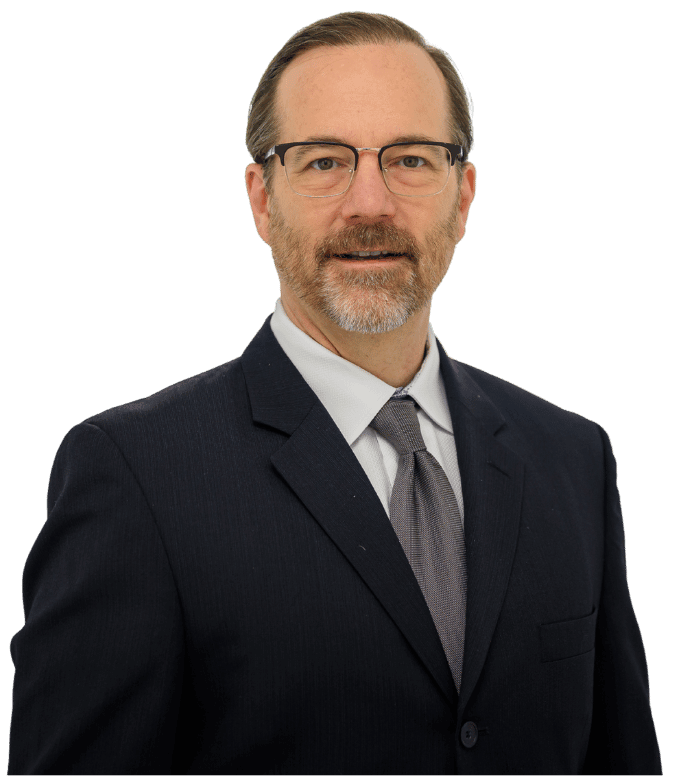
Medically reviewed by Dr. Michael Gartner, DO, FACS — double board-certified plastic surgeon and Fellow of the American College of Surgeons, practicing in Paramus, New Jersey.